TEMPO.CO, Jakarta - Over the past two weeks, internet watchdogs in India have reported dozens of removals of posts on social media that were critical of the government's failure to condemn the US-Israeli strikes on Iran.
The timing is significant, with a spike in social media account restrictions beginning around March 11, and the Internet Freedom Foundation documenting at least 42 instances by March 19.
Indian Prime Minister Narendra Modi's visited Israel in late February, just days before Israel launched its strikes on Iran, and his typically cautions stance on the conflict placed India's foreign policy under unusual domestic scrutiny.
This week, Modi acknowledged in a speech to parliament that the situation is "worrisome," but that India's "inherent" economic strength would allow the country to weather the "unprecedented challenges" posed by the conflict.
Modi also said New Delhi was "encouraging all sides to end [the conflict] peacefully."
A wave of removals
The removals of political cartoons, satirical content, opposition messaging and commentary questioning India's stance over the war in the Middle East show a clear pattern in the type of content being taken down.
Cartoonist Satish Acharya said two of his cartoons on India-Iran relations were blocked. One depicts Modi blindfolded alongside a body labelled "Killed by USA & Israel," and the other targets India's silence over the US Navy's sinking of an Iranian vessel in the Indian Ocean.
Satirical videos by online portal 'The Wire' were also removed, including content mocking the government’s silence following the US-Israeli strikes and questioning whether New Delhi had implicitly backed the offensive.
AI-generated posts by opposition figures and comments by a retired Air Force officer were also taken down. Some of the posts were warning that the government's silence could damage ties with Iran, and accusing New Delhi of abandoning its long-standing policy of strategic autonomy.
The apparent censorship also targeted popular parody accounts such as "@DrNimoYadav" and "@Nehr_who," and a widely viewed satirical reel mocking the prime minister's perceived closeness to Israel, which questioned his reluctance to publicly respond to the strikes, was also removed.
In early March, Meta platforms restricted the accounts of Kashmiri Shia clerics Molvi Masroor Abbas Ansari and Aga Syed Mohammad Hadi, along with several local news portals, following protests linked to the developments in Iran.
INC: 'Bureaucrats will decide what is acceptable'
The common thread in the removed content is sharp criticism of the government's foreign policy posture.
Spokesperson for the opposition Indian National Congress, Supriya Shrinate, said the takedowns reflect growing sensitivity around criticism of the government's approach to, and in particular its silence surrounding, the Iran conflict.
"Bureaucrats will decide what is acceptable on social media. Anything critical of the prime minister will have to go," said Shrinate.
"This is the biggest attack on freedom of speech. I have received 11 notices in recent days," she added.
However, there is no proof of a direct government order targeting critics of the Iran conflict — something both critics and analysts say is difficult to prove given how the system works.
Are the takedowns legal?
The removals are enabled by a legal framework that allows the government to intervene directly in online content by ordering platforms to remove or block content on grounds such as national security or public order.
These directives are legally binding but are not made public.
Apar Gupta, the founding director of the Internet Freedom Foundation, said most of the evidence has surfaced only because users shared takedown notices.
"There is no public record of these orders or the reasoning behind them. The opacity is by design and it makes it impossible to verify intent or trace decision-making," Gupta told DW.
Prateek Waghre, a researcher at the Tech Global Institute, told DW that the lack of transparency makes it hard to draw firm conclusions, pointing out that "confidentiality is built into the process."
But he did confirm "an uptick in blocking requests starting late February" and that "public scrutiny of the government's foreign policy is being viewed particularly sensitively."
Surge in removals tied to geopolitics
While India has long issued a high volume of takedown requests, analysts say the current clustering of removals around criticism of the government's Iran stance marks a notable shift.
The government maintains that any removals are necessary to protect national security, maintain public order and prevent the spread of inflammatory content, especially during periods of regional tension.
"These steps are about ensuring harmful or misleading content does not escalate tensions in a sensitive geopolitical environment. There is no intent to target legitimate criticism," a government official, speaking on condition of anonymity, told DW.
But digital rights advocates say the concern lies in how these powers are being used.
Internet Freedom Foundation director Gupta pointed to the overlap of timing, content and secrecy. "In a transparent system, you could examine whether this is coordinated. Here, you cannot, and that is the point," he said.
Researchers say the scale of removals might be far greater than what is visible. Waghre said at least 50 instances of takedowns involving political speech and satire have been documented since February, with a clear uptick in March.
"There appears to be heightened sensitivity to posts on social media platforms critical of the government," he said, adding that the real number is likely higher.
India's foreign policy under the microscope
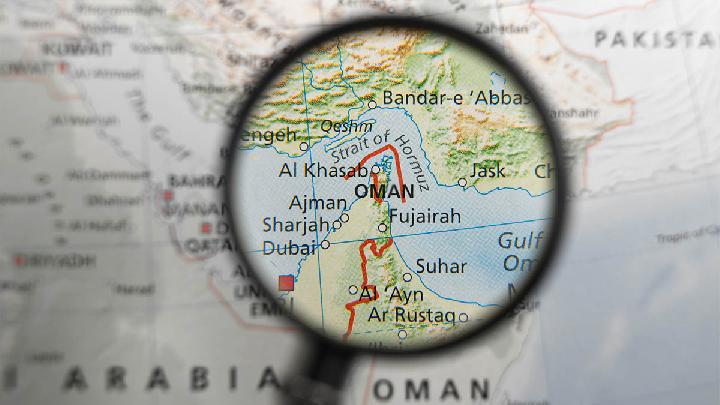
Pamela Philipose, a researcher and media expert, said the criticism reflects how Modi's foreign policy is now being felt more directly at home, where gas prices have surged as a result of the shuttering of the Strait of Hormuz, a vital shipping lane for around a fifth of the world's crude oil.
"Under the Modi government, foreign policy is no longer abstract or distant. It is under public scrutiny because it is beginning to affect everyday lives," Philipose told DW.
"The energy shock, especially rising LPG costs, has made the Iran conflict tangible for ordinary Indians, and that has turned it into a politically sensitive issue. People are asking questions despite the visible pressure on social media," she said.
For public interest technology expert Karan Saini, the recent surge is significant precisely because it is tied to a specific geopolitical moment.
"It is not possible to know the true scale of takedown orders," he told DW. "What we do know is that the numbers are rising, and the recent spike is unusual."
"Many of these notices appear to originate from government ministries. That sharp increase, combined with the lack of transparency, is unprecedented and worrying," Saini added.
Read: India Can Withstand Middle East Turmoil, Modi Tells Parliament
Click here to get the latest news updates from Tempo on Google News


















:strip_icc():format(jpeg)/kly-media-production/medias/5486410/original/015853500_1769586166-Pesib_Kurzawa.jpg)




:strip_icc():format(jpeg)/kly-media-production/medias/5468975/original/039991100_1768040283-malut.jpeg)