
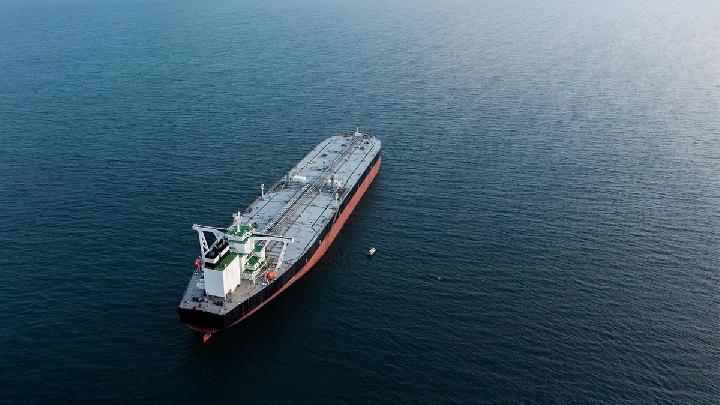
TEMPO.CO, Jakarta - The world is naturally fixated on the oil and liquefied natural gas (LNG) tankers missing from the Strait of Hormuz due to the Iran war. After all, the narrow waterway between Iran and Oman carries around a fifth of global crude and LNG exports from the Gulf to the rest of the world.
The more fragile cargo, however, is the fertilizer that helps feed the world and the food imports that keep Arabian Gulf states like the United Arab Emirates, Qatar, Kuwait, Oman, Bahrain, and Saudi Arabia alive.
Gulf nations account for 20 percent of global traded volumes of key fertilizers such as ammonia, phosphates, and sulfur, data from the maritime intelligence company Signal Group show.
Nearly half the world's traded urea — the most widely used nitrogen fertilizer — comes from the Gulf region, with Qatar accounting for one-tenth of the global supply, according to Bloomberg Intelligence.
When QatarEnergy last week halted production after Iranian strikes on Ras Laffan, the world's biggest LNG and fertilizer hub, hundreds of thousands of tons of key fertilizer nutrients and precursors were sidelined.
The compounding effects of the Iran war threaten the third major risk to global food security in six years, after the COVID-19 pandemic and Moscow's seizure of farmland and ports used to export Ukrainian grain at the start of Russia's war in Ukraine in 2022.
Since the latest conflict began, fertilizer prices have risen 10 to 30 percent, although they're still some 40 percent lower than in the weeks after Russian tanks rolled into Ukraine.
Fertilizer shortages could impact crop yields
According to UNCTAD, the United Nations agency that helps developing nations integrate into the global economy, about 1.33 million tons of fertilizer are exported through Hormuz every month. So a 30-day closure of the strait could be enough to trigger shortages and yield risks for nitrogen-dependent crops like corn, wheat, and rice.
"Higher prices will affect crop choice," Joseph Glauber, senior research fellow at the Washington-based International Food Policy Research Institute (IFPRI), told DW. "Farmers may go with the crop that needs less fertilizer rather than the one that needs nitrogen-intensive fertilizer, to avoid higher input costs."
Glauber added that farmers, particularly in poorer countries, may simply cut their overall fertilizer use, which could hurt crop output.
Despite U.S. President Donald Trump's insistence this week that the Iran war is "very nearly over," Iran on Wednesday fired on at least three vessels in or near Hormuz, according to the United Kingdom's Maritime Trade Operations (UKMTO), in a sign that Tehran remains determined to keep the Strait virtually closed.
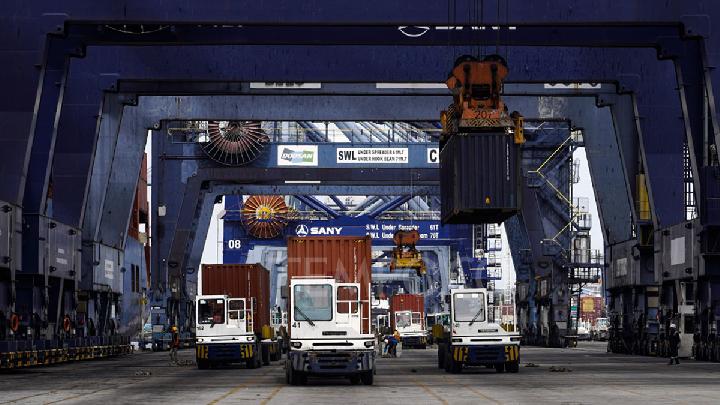
Additional strikes were reported overnight into Thursday, including on a container ship and tankers in the broader Gulf region.
The longer Hormuz remains out of bounds for commercial shipping, the more global fertilizer supply chains will begin to seize up, say commodity analysts.
"A prolonged disruption would significantly tighten fertilizer availability in major import-dependent regions such as Brazil, India, South Asia, and parts of the EU," warned Dutch bank ING in a research note earlier this month.
Other fertilizer producers, such as Russia, China, the United States, and Morocco, have limited spare capacity and will struggle to instantly ramp up production to make up the shortfall. China has put import restrictions on phosphate and nitrogen fertilizers, but could now be pressured to relax them.
"Nitrogen can be produced anywhere where there's natural gas or coal, unlike potash or phosphates, where you are dependent on mineral deposits to mine," Glauber, a former senior economist at the U.S. Department of Agriculture, said. "But the high cost of natural gas is really the issue," as production increases could be uneconomical.
Rising oil prices to push food costs higher
Beyond fertilizer constraints lies oil's dominant role in shaping food costs, powering everything from farm machinery and trucks that move harvests to processing plants that turn crops into food and refrigeration. Every stage of food production is now exposed to surging energy prices.
With Brent crude still elevated near $89 (€76.83) after wild swings to $119.50, the pain is already measurable at the pump. U.S. West Coast diesel has surged to $4.69 per gallon, a 14 percent jump over the past two weeks, while diesel prices in Germany now exceed €2.10 ($2.43) per liter, a one-fifth rise in just days.
Asian economies, which import the vast majority of Gulf oil, like China, Japan, and South Korea, are also seeing sharp increases in fuel prices. India's government, meanwhile, has vowed to freeze diesel and gasoline prices, shielding consumers and commercial transport from soaring costs.
International Monetary Fund (IMF) Chief Kristalina Georgieva warned in an interview with Bloomberg last week that a sustained 10 percent increase in energy prices persisting for a year could add 0.4 percentage points to worldwide inflation and shave up to 0.2 percent off global economic growth.
"Energy indirectly makes up about 50% of the cost of food," IFPRI's Glauber told DW. "After most countries experienced high rates of food inflation in 2023/4, prices haven't come down; it's just the rate of increase has been falling."
Import-dependent nations to suffer most
The human cost of the Iran war will fall unevenly, with the poorest and most import-dependent countries absorbing the shock of fertilizer shortages and soaring energy prices.
India is among the most exposed, as it relies on the Gulf for up to two-thirds of its nitrogen fertilizer imports, including a large share of urea. A shortage of fertilizer would leave the upcoming monsoon planting season vulnerable, sparking sharply higher production costs for rice, wheat, and other staples that feed 1.45 billion people.
Brazil, one of the world's largest agricultural exporters, depends on Gulf-sourced urea for roughly 40 percent of its nitrogen needs. Any sustained disruption threatens soy and maize yields at a moment when global supplies are already tight.
Sub-Saharan Africa faces the gravest risk in the longer term. Many African countries already use fertilizer at rates far below those needed for decent yields. So even modest price increases could force smallholders to cut usage further, depressing harvests and deepening chronic hunger.
Inside Iran, inflation was already over 40 percent before the conflict, according to Bloomberg, with food prices rising even higher. Disruptions to imports, energy costs, and domestic logistics are likely to further elevate food inflation, intensifying hardship for millions of people.
Gulf states, which import 80 to 90 percent of their food — from grains and meat to dairy and vegetable oils — are also acutely dependent on Hormuz for inbound shipments. A prolonged closure could drain strategic reserves within months, forcing rationing or costly rerouting via the Red Sea and the Gulf of Oman.
Read: State Budget Under Pressure as Oil Prices Soar
Click here to get the latest news updates from Tempo on Google News



































:strip_icc():format(jpeg)/kly-media-production/medias/5486410/original/015853500_1769586166-Pesib_Kurzawa.jpg)