TEMPO.CO, Jakarta - Tens of thousands of workers in Indonesia are expected to take to the streets on May 1, 2026, to mark International Workers’ Day, or May Day, with labor leaders warning that many of last year’s demands remain unresolved.
President of the Confederation of Indonesian Trade Unions (KSPI) Said Iqbal said around 50,000 workers will join the main rally in the Greater Jakarta (Jabodetabek) area, while hundreds of thousands more are expected to participate in demonstrations across the country.
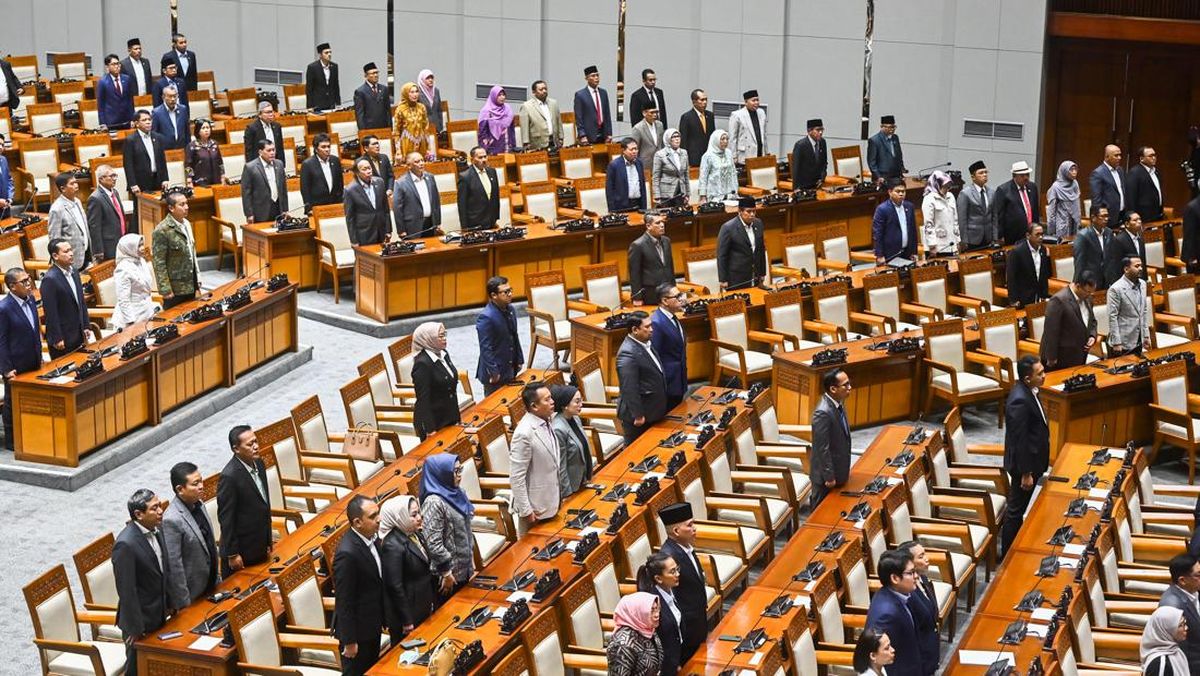
The May Day 2026 protests will involve KSPI members and the Labor Party, with rallies planned across 38 provinces and more than 350 regencies and cities. In Jakarta, the main protest will be centered outside the House of Representatives (DPR) building starting at 10 a.m. local time.
“This rally is constitutional, peaceful, and orderly. We will ensure that all participants remain disciplined and do not engage in anarchic acts,” Said, who also serves as Labor Party president, said in a written statement on Monday, April 6, 2026.
Said said this year’s May Day protests will focus on six key demands, most of which are a repeat of last year’s agenda.
“If the demands are the same as last year, it means the government is not serious about resolving labor issues. This is not just criticism, this is an alarm,” he said.
Here are the six demands behind the May Day 2026 protests in Indonesia:
1. A New Manpower Law
The top demand is the immediate passage of a new Manpower Law, as ordered by Indonesia’s Constitutional Court.
Said said the court had given the government and the DPR two years to draft a completely new law—not just amend the existing one. However, with less than six months left before the deadline, he said no clear official draft has been made public.
“Less than six months remain before the deadline, but there has been no real progress. This is clearly a constitutional violation,” he said.
KSPI and the Labor Party say they have already submitted a 700-page draft bill based on the principles of job security, income security, and social security, including proposals for five new forms of protection: food, housing, education, clean water, and unemployment benefits.
2. End Outsourcing and Low-Wage Policies
The second demand is the abolition of the outsourcing system and an end to what unions describe as a cheap wage regime.
Said said President Prabowo Subianto had previously pledged to eliminate outsourcing, but the policy has yet to be realized as May Day approaches.
“We are simply reminding the President. Outsourcing leaves workers with no future. They can be laid off at any time, without job security,” he said.
KSPI also criticized how wage policies are being implemented, saying that although a wage increase formula already exists, many regional governments and ministries have failed to enforce it properly.
3. Prevent Mass Layoffs
The third issue is the growing threat of mass layoffs, which Said said is becoming more urgent due to global geopolitical tensions and domestic economic policy.
He pointed to conflicts involving Iran, Israel, and the United States, which he said have pushed up energy prices—especially industrial fuel—raising production costs for companies and increasing pressure for workforce cuts.
“Layoffs are no longer a threat; they are already looming. Many companies have signaled plans to streamline operations,” he said.
Said also criticized import policies, including vehicle imports, arguing that they reduce opportunities for domestic manufacturing and job creation.
“This is not just about cheaper prices. This is about the loss of jobs,” he said.
4. Tax Reform for Workers
The fourth demand is tax reform that favors workers.
KSPI and the Labor Party are proposing that the non-taxable income threshold (PTKP) be raised from Rp4.5 million to Rp7.5 million per month to boost purchasing power.
Said said many minimum-wage workers are already close to the poverty line and could easily slip into poverty if their income drops even slightly.
“If the PTKP is raised, workers will have more room to save and spend. Higher consumption will also help drive economic growth,” he said.
The unions are also calling for the removal of taxes on holiday allowances (THR), Old-Age Security (JHT), and pensions.
“Holiday allowances are meant for festive needs. They are already spent on transportation and consumption, so why should they still be taxed? JHT and pensions are workers’ savings, not new income,” Said said.
5. Pass the Domestic Workers’ Protection Bill
The fifth demand is the immediate passage of the Domestic Workers’ Protection Bill (RUU PPRT).
Said said the DPR had promised to pass the bill within three months, but nearly a year later, there is still no certainty.
“Domestic workers are the most vulnerable group. They need legal protection now, not just promises,” he said.
6. Pass the Asset Seizure Bill
The final demand is the passage of the Asset Seizure Bill, which labor groups say is crucial to strengthening Indonesia’s anti-corruption efforts.
According to KSPI and the Labor Party, fighting corruption should not stop at prosecution but must also include mechanisms to recover stolen state assets.
“This was also a promise that was made. We will continue to push for its immediate enactment,” Said said.
Pre-May Day Rally Planned on April 16
Ahead of the May Day demonstrations, the Federation of Indonesian Metal Workers’ Unions (FSPMI) is set to hold a Pre-May Day rally on April 16, 2026, outside the DPR building in Jakarta.
The event is expected to draw around 5,000 workers from across the country and serve as a lead-up to the main May Day protest.
Read: Prabowo Condemns Killing of Indonesian UN Peacekeepers in Lebanon
Click here to get the latest news updates from Tempo on Google News



















:strip_icc():format(jpeg):watermark(kly-media-production/assets/images/watermarks/bola/watermark-color-landscape-new.png,1125,20,0)/kly-media-production/medias/5495647/original/074499000_1770385031-barba.jpeg)