
TEMPO.CO, Jakarta - The manipulation of gift cards-prepaid card vouchers containing balances-is becoming more rampant as the digital payment and e-commerce sectors continue to grow in Indonesia. This fraudulent practice silently erodes the revenues of retailers, banks, and loyalty platforms without being easily detected.
Zentara Technologies, a cybersecurity company based in Jakarta and Singapore, raised this issue at the International Marketing Association (IMA) Europe Conference in Copenhagen. During the forum, Zentara presented various fraudulent schemes that exploit stored-value products in various countries, including Southeast Asia.
Citing a written statement on Wednesday, June 16, Zentara CEO Regal Star said that the most damaging fraud today doesn't always involve hacking into systems. Instead, it disguises itself to appear completely normal.
Regal mentioned that many companies still hope that fraud will be detected and trigger standard security alarms. However, fraud, such as gift card scams, is difficult to detect because these transactions appear to be normal customer activity. He said the system has not been breached. Rather, it is being used against the business itself.
According to Zentara's review, the gift card fraud modus operandi now largely exploits legitimate business processes rather than hacking into systems. Perpetrators exploit various stages in the gift card's lifecycle, from production to activation and redemption.
One discovered modus operandi involves obtaining card details from gift cards displayed on retail shelves. Once the card has been activated by the buyer, the perpetrators can access the funds without arousing suspicion. As a result, the intended gift recipient loses the expected funds, while retailers, banks, and buyers are unaware of any violations. This also creates data anomalies.
Popular Yet Fragile
The gift card industry in Indonesia itself is rapidly growing. Based on the "Indonesia Gift Card Business and Investment Opportunities Databook," the national gift card market was worth US$2.37 billion in 2025 and is projected to grow at a compound annual growth rate (CAGR) of 9.1 percent to reach about US$3.68 billion in 2030.
At the global level, the gift card market is estimated to reach US$1.2 trillion annually. The increasing use of gift cards, digital vouchers, and loyalty programs is driving organizations to enhance the protection of their customers' assets and payment systems.
Zentara noted that most gift card fraud cases go undetected and unreported. This condition makes it difficult to identify revenue losses, especially amid the continuous growth of Southeast Asia's digital economy. The "e-Conomy SEA 2024" report from Google, Temasek, and Bain recorded a digital economy value of US$263 billion in gross merchandise value (GMV) in 2024.
The company's research identified three emerging global fraud methods. The first is card draining, which exploits card information before activation. The second is synthetic identity fraud, which is used to obtain and monetize stored value. The third is AI-based social engineering attacks targeting gift card managers.
Regal continued, instead of solely focusing on technological vulnerabilities, modern fraud increasingly exploits business processes and human behavior.
Hard to Detect with Old Systems
Zentara Technologies' President and Co-Founder, Darian Kuswanto, believes that many organizations still use an outdated approach to measure fraud risk. He said a common misunderstanding is equating security with the absence of violations.
The most significant fraud cases, he explained, often escape conventional alarms by mimicking legitimate customer transactions. Without granular asset monitoring, such as tracking gift cards from initial activation to final redemption, institutions risk bearing substantial yet undetected financial losses.
To minimize risk, Zentara recommends that companies monitor gift card redemption patterns and track how quickly cards are activated and redeemed. He added this includes training employees to recognize AI-based social engineering.
Read: Can Biometric SIM Registration Reduce Cybercrime in Indonesia?
Click here to get the latest news updates from Tempo on Google News
Can Biometric SIM Registration Reduce Cybercrime in Indonesia?
11 hari lalu
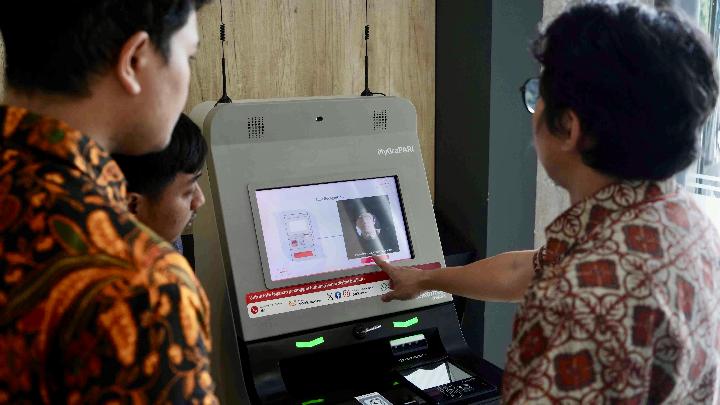
Indonesia will introduce biometric registration for new SIM cards on July 1, in a bid to curb digital fraud. Will it be enough to reduce cybercrime?
Fraudulent Practices Drain State Revenue
19 hari lalu

There are research and studies on fraudulent practices in exports and imports. The schemes are carried out on a massive and systematic scale.
Prabowo Summons Ministers over Export Fraud, New SOE
28 hari lalu

President Prabowo Subianto summoned his economic ministers to discuss export fraud, under-invoicing data, and the setup of a new export SOE.
Police Expose Fraud Posing as Red-and-White Cooperative
29 hari lalu

Five people were arrested in Jakarta for allegedly scamming Boyolali residents with fake Red-and-White Cooperative projects.
Indonesian Man Arrested in Thailand Over US$10M Romance Scam
50 hari lalu

A 33-year-old Indonesian citizen has been arrested in Thailand after committing fraud disguised as a romance scam.
BNI Guarantees Safety of Customer Funds amid Aek Nabara Case
59 hari lalu

BNI ensures the security of official customer funds following an individual-led fraud case at the Aek Nabara branch.
Samsung to Roll Out AI Scam Detection Across Galaxy Phones
12 April 2026

Samsung will introduce an artificial intelligence (AI)-based feature to prevent online fraud on more Galaxy devices.
Indonesia Re-Evaluates E-Commerce Rules to Curb Online Fraud
16 Maret 2026

Trade Minister Budi Santoso announces a re-evaluation of Indonesia's e-commerce regulations to tackle online fraud and prioritize MSME products.
UNODC Launches #TrappedInScamCrime to Combat Online Scam in Indonesia
13 Maret 2026
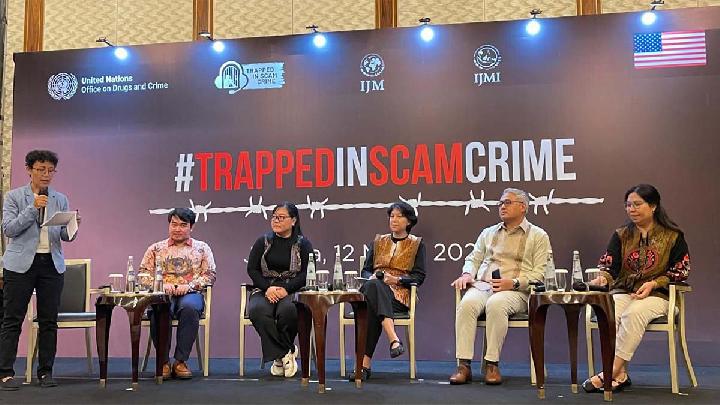
UNODC and partners launched the #TrappedInScamCrime campaign in Jakarta to raise awareness about human trafficking linked to online scam operations.
Mirae Asset Linked to Rp14.5 Trillion Stock Fraud Probe
5 Maret 2026

OJK launched raids on Mirae Asset Sekuritas Indonesia over an alleged Rp14.5 trillion insider trading case.