

The National Park Financing Task Force risks diverting conservation goals toward commercial interests. There is a potential conflict of interest.
THE establishment of the National Park Management Financing Innovation Task Force has sparked serious concerns about the direction of environmental governance. Behind the buzzword “financing innovation” lie risks of conflicts of interest, as well as a push for the commercialization of conservation areas, which could potentially undermine the protection mandate.
The task force was established through Presidential Decree No. 8/2026, signed by President Prabowo Subianto on April 16. The decree serves as a framework for new conservation funding schemes, ranging from multi-stakeholder partnerships to result-based payment mechanisms. The policy’s objectives sound ideal: strengthening species protection, maintaining the ecological functions of national parks, and supporting the 2030 Forestry and Other Land Use Net Sink target.
However, its institutional design creates problematic loopholes. It is hard to ignore that appointing Hashim Djojohadikusumo as task force chair raises a potential conflict of interest. Hashim is a businessperson with numerous ventures, including in the forestry sector. His role as task force chair gives him access to critical data, including information on carbon credit potential. Amid the burgeoning carbon economy, such data is not only an administrative component but also a commercially valuable commodity.
Moreover, business entities affiliated with Hashim, such as the Arsari Group, are major players in the forestry and carbon trading sectors—further heightening potential conflicts of interest. Without independent oversight mechanisms, it is difficult to ensure that the task force’s policies do not conflict with private interests. Moreover, as the task force chief, Hashim reports directly to the president—his own brother—thereby limiting the scope for checks and balances.
Even before the task force was formed, there were already signs of commercialization. A report by Tempo revealed zoning changes in Way Kambas National Park, Lampung, which opened up opportunities for carbon trading and tourism. The changes reportedly involved Karen Brooks, a consultant with close ties to the political inner circle. The case illustrates how power and economic interests infiltrate conservation policies.
Beyond potential conflicts of interest, the existence of the task force also creates institutional overlap. The Environmental Fund Management Agency (BPDLH) has been responsible for mobilizing and managing environmental funds. As a public service agency under the Ministry of Finance, the BPDLH has a more accountable oversight system than an ad hoc task force. Therefore, it is hard not to suspect that the task force has a function to shift funding control to a more fluid structure subject to minimal oversight.
The combination of a lax institutional framework and major economic interests makes the government’s conservation narrative incongruous. Rather than strengthening protection, the task force-based governance risks turning national parks into commodities. In the long term, the threat is not merely ecological degradation, but also a shift in the area’s function—from a protected space to a commercial arena.
If these mechanisms are not corrected, Indonesia risks losing its national parks as bastions of biodiversity. Conservation areas that should be protected as ecological heritage could instead become commodities for commercial gain.
Eight Javan Leopards Identified in Bromo Tengger Semeru National Park
9 hari lalu
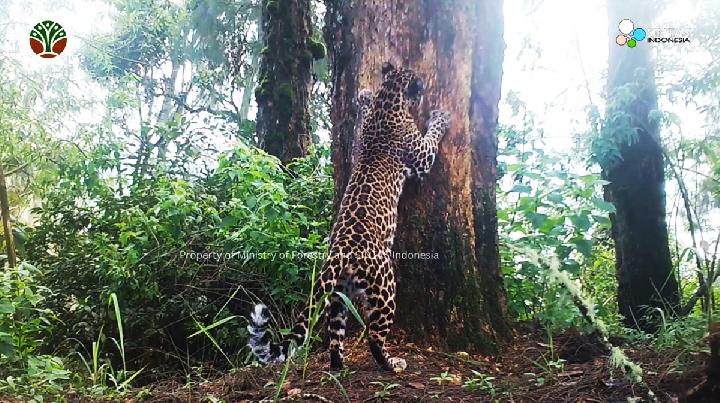
Landscape changes driven by the expansion of human activities over recent decades have narrowed the Javan leopard's habitat.
Two Sumatran Tiger Cubs Born in Lampung Conservation Site
9 hari lalu

The birth of these two cubs from rescued Sumatran tigers marks a milestone for ex situ conservation in Lampung Province.
Nature Conservation Pesantren
59 hari lalu

Environmentally friendly Islamic boarding schools are promoting sustainable living. They are local agents of transformation for people living nearby.
Forestry Ministry: We Revise Zoning at Any Time
26 Februari 2026

An explanation from Ahmad Munawir, Director for Species and Genetic Conservation, regarding Karen Brooks' business in Way Kambas National Park
Good News for Zebra Shark Conservation
5 Februari 2026
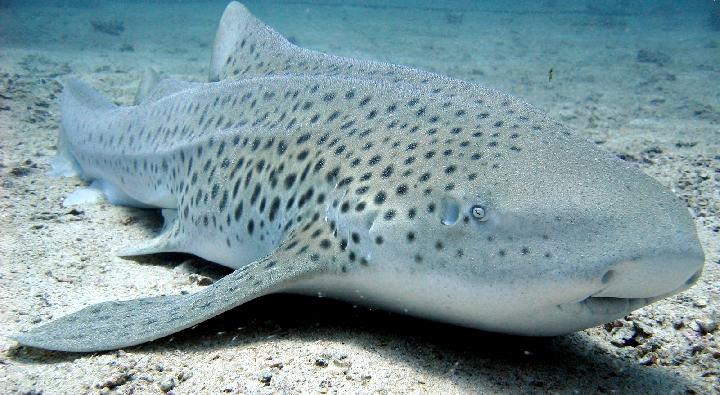
With the support of the global community, the people of Raja Ampat are trying to save the zebra shark from the threat of extinction.
Efforts to Save Raja Ampat's Endangered Zebra Sharks
5 Februari 2026
All-women ReShark team succeeded in breeding endangered zebra sharks on Kri Island, Raja Ampat. As many as 57 sharks have been released into the sea.
Prabowo and King Charles III to Restore 57 National Parks
22 Januari 2026
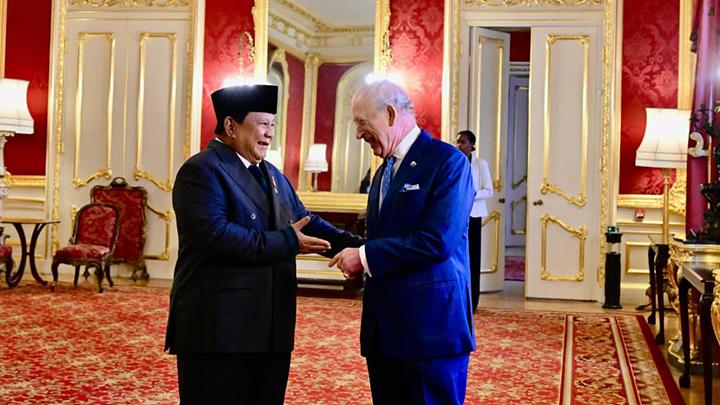
The primary focus of the meeting between President Prabowo and King Charles III was cooperation in the field of environmental conservation.
Prabowo Meets King Charles III, Discusses Elephant Conservation
22 Januari 2026
Indonesian President Prabowo Subianto met with King Charles III of England at Lancaster House, London, on Wednesday, January 21, 2026.
Flash Floods Bring Logs from Upstream
13 Desember 2025
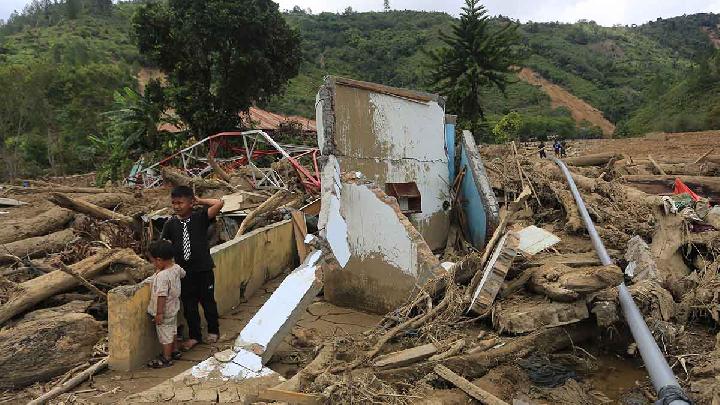
Timber carried by flash floods offered stark evidence of deforestation. The forests at the headwaters of major river basins had been severely damaged.
Juvenile Whale Shark Strandings in Indonesia Have Risen Fivefold Since 2020
6 November 2025
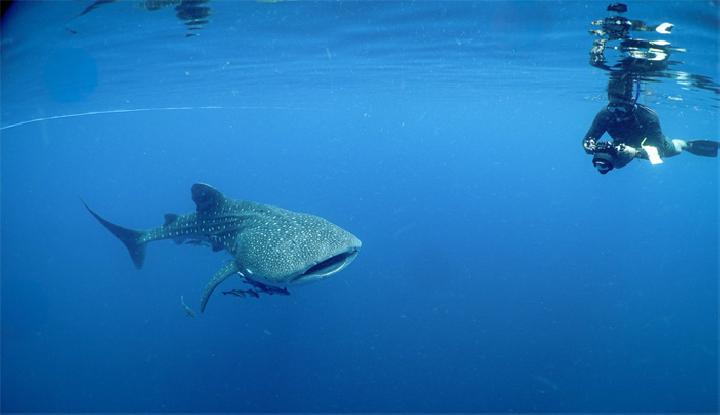
More than 70 percent of the stranded whale sharks were juveniles measuring between four and seven meters in length.


















:strip_icc():format(jpeg)/kly-media-production/medias/3642128/original/083822000_1637681616-2_000_Hkg660630.jpg)

:strip_icc():format(jpeg)/kly-media-production/medias/5502638/original/046269700_1770993794-vickery.jpg)









:strip_icc():format(jpeg)/kly-media-production/medias/5485282/original/038819000_1769501489-pikojerico-175__1_.jpg.jpeg)