
TEMPO.CO, Jakarta – Indonesia’s proposed work-from-home (WFH) policy for civil servants and private-sector employees after Eid al-Fitr could hurt the earnings of millions of app-based drivers, the Indonesian Transport Workers Union (SPAI) has warned.
SPAI Chairperson Lily Pujiati said the plan would likely reduce daily income for online motorcycle taxi, or ojek online (ojol), drivers, as fewer people commute and demand for deliveries declines.
“This will definitely reduce the daily income of ojol drivers,” Lily said in a written statement on Wednesday, March 25, 2026.
She said the policy would not only affect online motorcycle taxi drivers, but also ride-hailing car drivers and couriers. According to Lily, the WFH arrangement could lower demand for passenger trips as well as deliveries of goods, food, and beverages.
Citing Transportation Ministry data from 2025, Lily said there are around 7 million online motorcycle taxi drivers in Indonesia. She estimated that the average gross income of ojol drivers is about Rp100,000 (US$6) per day, meaning many drivers could see a significant drop in earnings if the policy is implemented.
Beyond criticizing the WFH plan, Lily urged the government to guarantee drivers’ income by recognizing their right to receive at least the provincial minimum wage, or Upah Minimum Provinsi (UMP).
She argued that app-based drivers should qualify for minimum wage protection because they are workers under an employment relationship, as regulated in Article 1, Paragraph 15 of Law No. 13/2003 on Manpower.
The government’s WFH plan has also drawn concern from business groups. Sarman Simanjorang, deputy chair of the Indonesian Chamber of Commerce and Industry (Kadin) for Regional Autonomy, said the policy could weaken household consumption and hurt several sectors of the economy.
“The transportation sector will be pressured due to the decline in passenger numbers,” Sarman said in a text message on Monday, March 23, 2026.
He said the policy could also reduce turnover for micro, small, and medium enterprises (MSMEs), particularly food and beverage vendors that rely on office workers, such as snack sellers in office canteens.
Sarman warned that weaker household spending could weigh on Indonesia’s economic growth in the second quarter of 2026. He noted that unlike the first quarter, which was supported by Lunar New Year and Eid-related consumption, there are no major events in the second quarter expected to significantly boost consumer purchasing power.
He therefore urged the government to prepare mitigation measures to prevent the policy from undermining the national economic growth target.
Sarman also said not all industries are able to adopt WFH arrangements. Sectors such as retail centers and malls, hotels, restaurants, cafes, transportation, healthcare, banking, vehicle services, and manufacturing require employees to work on-site. By contrast, he said administrative roles that rely on digital systems are more suitable for remote work.
He added that the business community was not consulted in formulating the policy.
“The business world was not involved in making this policy,” he said.
The government has confirmed that the WFH policy will be introduced after Eid as part of efforts to save energy amid rising global oil prices. The policy will apply only one day per week.
Coordinating Economic Minister Airlangga Hartarto said the rule will apply to civil servants and be recommended for private-sector workers, except those in public service roles.
“The WFH regulations will be detailed. But after Eid, we will implement it. For civil servants and advise for the private sector. But not for those working in the public service sector,” Airlangga said after Eid prayers in Jakarta on Saturday, March 21, 2026, as quoted by Antara.
He said the government would coordinate with the Manpower Ministry and the Home Affairs Ministry to ensure the policy is implemented effectively.
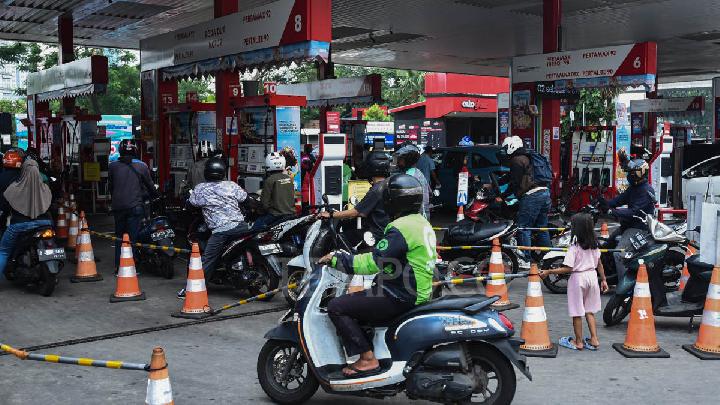
In the same context, Finance Minister Purbaya Yudhi Sadewa said one day of WFH could improve energy efficiency, particularly by reducing fuel consumption.
“Rough estimates show that WFH can save about one-fifth, approximately 20 percent, of fuel usage,” Purbaya said.
He said the policy was limited to one day to balance work flexibility and productivity.
“There will be continuous holidays. People won’t work. So with WFH, sometimes there are things that can’t be done properly,” he said.
Read: Indonesian Lawmaker Opposes Nationwide Online Learning
Click here to get the latest news updates from Tempo on Google News





















:strip_icc():format(jpeg)/kly-media-production/medias/3642128/original/083822000_1637681616-2_000_Hkg660630.jpg)

:strip_icc():format(jpeg)/kly-media-production/medias/5502638/original/046269700_1770993794-vickery.jpg)












:strip_icc():format(jpeg)/kly-media-production/medias/5485282/original/038819000_1769501489-pikojerico-175__1_.jpg.jpeg)