
TEMPO.CO, Jakarta - Weeks of fighting between the US, Israel and Iran have badly disrupted the flow of oil and gas through the Strait of Hormuz, leaving Southeast Asian governments scrambling to provide enough fuel for their industry, airlines and household consumption.
At the same time, Beijing is trying to turn that anxiety to its advantage.
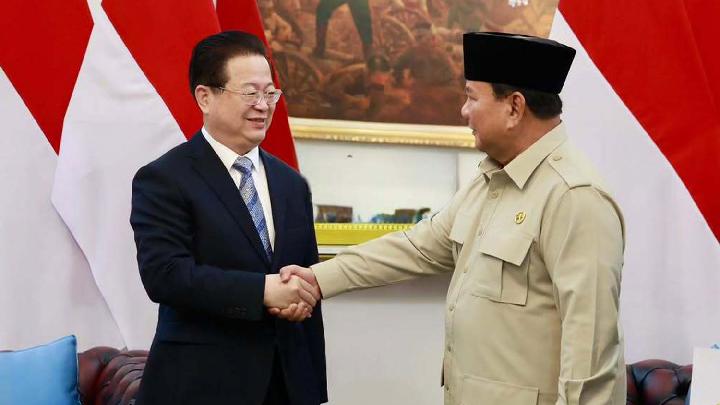
"China is willing to strengthen coordination and cooperation with Southeast Asian countries to jointly address energy security issues," Lin Jian, spokesperson for China's Foreign Ministry, told a news conference last week.
Fuel shock spreading through Asia
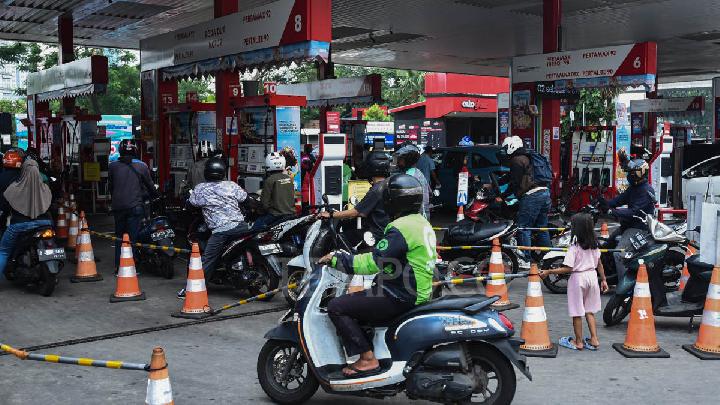
Southeast Asian nations have already imposed a mix of fuel-saving measures and subsidies, joining a frantic global push to find alternative suppliers and trade routes. Even countries like Malaysia and Brunei—oil and gas producers and exporters—remain vulnerable to the broader inflationary and supply-chain shock spreading through the region.
On March 24, the Philippines declared a state of national energy emergency that will remain in force for a year, warning of an "imminent danger" to the country's energy supply. Manila had already shifted government offices to a four-day workweek and ordered agencies to curb energy use.
The Philippines has also rolled out cash aid for transport workers while warning that a jet fuel shortage could eventually ground some of its aircraft. Vietnam has already tapped into its fuel price stabilization fund and told airlines to prepare for cuts, with importers warning that jet fuel supply could be guaranteed only through March.
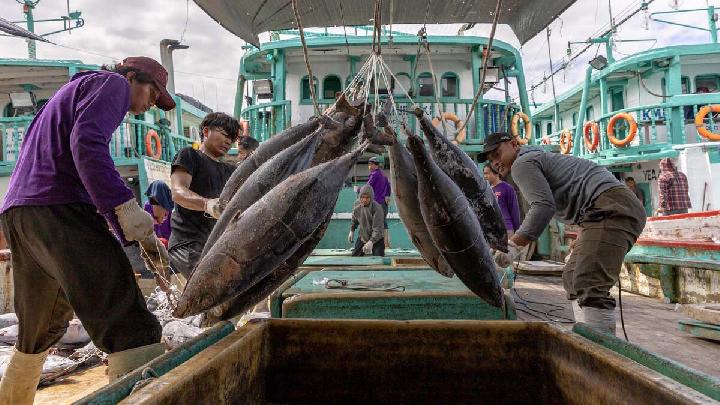
Indonesia has vowed to absorb part of the shock through the state budget and bigger subsidies. Thailand is weighing fresh relief as soaring diesel prices hammer sectors such as fishing, where crews say many boats may be forced to stay in port. Malaysia, for its part, has increased subsidy spending to keep pump prices steady.
Governments are also looking beyond the Gulf for stopgap supplies. Reuters reported last week that Asia was on track to import a record volume of Russian fuel in March, with Southeast Asia expected to be the biggest recipient.
China harmonizes with Southeast Asia on Iran war
Meanwhile, China has used the crisis to "project itself as a responsible and stabilizing actor, calling for de-escalation in the Middle East and vowing to work with Southeast Asian countries to ease energy shortages," Li Mingjiang, associate professor at Singapore's S. Rajaratnam School of International Studies, told DW.
Beijing has stayed close to the Southeast Asian consensus on Iran, urging diplomacy. Similar to the countries in the region, the Chinese government wants to see the Strait of Hormuz reopened as soon as possible, while also remaining wary of being pulled directly into the conflict, Chin-Hao Huang, co-director of the Center on Asia and Globalization at the Lee Kuan Yew School of Public Policy, told DW.
"To the extent that it's made any public reaction, it's to issue calls for restraint, ceasefire, and dialogue; these are all points of common denominator for most governments in Southeast Asia," Huang added.
US actions 'very unpopular'
The crisis also feeds into Beijing's narrative that China is now the only superpower defending peace, free trade and multilateralism, painting itself as the hero confronting the aggressive and selfish United States.
"The US-Israel military intervention in Iran is very unpopular in several Southeast Asian countries. China does not need to do anything for the opinion towards the US to sour further in the region," Enze Han, an associate professor at the University of Hong Kong, told DW.
"Similarly, the rising gas price in many countries in the region is also worsening the image of the United States. Again, Beijing does not need to do anything for the blame to be on the United States," Han added.
Moving closer to China, however, is not a guarantee of energy stability for Asian nations. Beijing has already banned fuel exports to protect its own domestic supply.
On March 18, Cambodia said Chinese and Vietnamese export curbs had already forced it to seek alternative suppliers and prepare for shortages at home.
Can Southeast Asia move away from Gulf fossil fuels?
Over the longer term, though, the crisis may yet strengthen China's hand in Southeast Asia. The energy shock reinforces regional concerns about overdependence on Middle Eastern oil, which in turn strengthens the appeal of renewable energy, an area where Chinese firms are highly competitive, Li told DW.
China is deeply embedded in Southeast Asia's green transition. Its firms are among the largest investors in the region's budding electric-vehicle and battery sectors. Beijing has also been the principal funder of hydropower dams and vast solar farms across mainland Southeast Asia, turning the region into both a market for Chinese clean-tech exports and a production base for panels, batteries and electric vehicles.
Speaking at the Boao Forum in China on Thursday, Singaporean Prime Minister Lawrence Wong said China could "play a critical role" in shaping global outcomes and "an even bigger role in supporting regional prosperity and stability" while urging Beijing to remain a strong advocate for open, rules-based trade.
Wong also said that ASEAN should work with China on renewable energy to advance the regional power grid. If the Iran war ends up hardening Southeast Asia's resolve to diversify away from oil, Beijing could end up benefiting, not only from the current crisis, but from the region's strategic response to it as well.
Read: Who Is Trump Talking to in Iran?
Click here to get the latest news updates from Tempo on Google News



















:strip_icc():format(jpeg)/kly-media-production/medias/3642128/original/083822000_1637681616-2_000_Hkg660630.jpg)

:strip_icc():format(jpeg)/kly-media-production/medias/5502638/original/046269700_1770993794-vickery.jpg)





:strip_icc():format(jpeg)/kly-media-production/medias/5485282/original/038819000_1769501489-pikojerico-175__1_.jpg.jpeg)