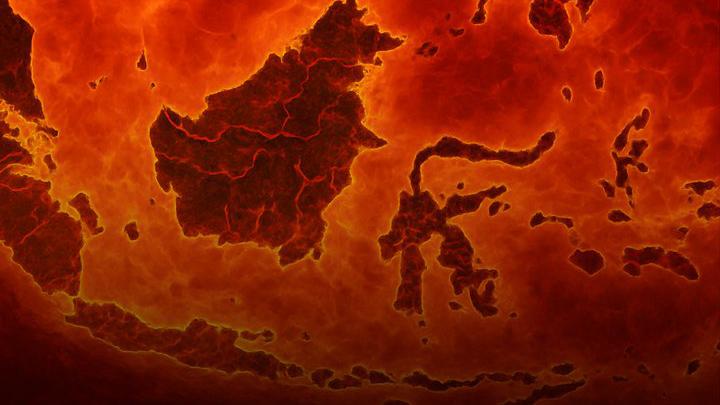
TEMPO.CO, Jakarta - A developing El Nino pattern in the Pacific Ocean is expected to become one of the world’s biggest weather stories heading into the second half of 2026, with forecasters warning that the phenomenon could potentially evolve into a powerful “Super El Nino.”
The US National Oceanic and Atmospheric Administration (NOAA) Climate Prediction Center stated that El Niño conditions are likely to develop between May and July and persist through at least the end of 2026.
El Nino is a climate pattern caused by unusually warm sea surface temperatures in the central and eastern Pacific Ocean. The phenomenon can alter global weather systems, intensify storms, disrupt rainfall patterns, and affect temperatures worldwide.
According to CT Insider, the impacts in parts of the United States, including Connecticut, may not become fully noticeable until the colder months later this year.
Forecasters explained that El Nino typically has a stronger influence during autumn and winter, when it can shift jet stream patterns and storm tracks across North America. In Connecticut, this could increase the chances of coastal storms or nor’easters during the 2026-2027 winter season.
However, weather experts cautioned that a stronger El Niño does not automatically guarantee heavier snowfall. Storm intensity and precipitation patterns will still depend heavily on the availability of cold air and the exact path of winter systems.
During late summer and autumn, Connecticut could instead experience repeated periods of humidity, thunderstorms, and warmer-than-normal temperatures before the broader atmospheric pattern fully develops.
Meteorologists are also closely monitoring whether the current event could strengthen into a “Super El Niño,” a rare and exceptionally intense version of the climate cycle.
Yardbarker reported that some long-range climate models from the European Centre for Medium-Range Weather Forecasts (ECMWF) are projecting Pacific Ocean temperatures reaching as much as 3 degrees Celsius above normal, levels associated with historically strong El Nino events.
Scientists noted that the world’s strongest recorded El Nino, which occurred between 1877 and 1878, contributed to severe droughts and crop failures that triggered famine across several parts of the world.
Historical estimates cited by researchers suggest that more than 50 million people died globally during that period due to climate-related food shortages affecting regions including India, China, and Brazil.
Researchers described the 1877 event as “arguably the worst environmental disaster to ever befall humanity” because of its widespread humanitarian impact.
Despite comparisons with historical events, experts stressed that modern infrastructure, forecasting systems, and food distribution networks have significantly improved since the 19th century, reducing the likelihood of a similar global catastrophe.
Still, forecasters warned that a strong El Nino could bring major disruptions to weather systems worldwide, including stronger storms, flooding in some regions, drought in others, and increased pressure on global agriculture.
University at Albany atmospheric science professor Paul Roundy stated that forecasting confidence has increased in recent weeks as ocean conditions continue strengthening.
“The shift in ECMWF Nino 3.4 solidly into record territory reflects the additional momentum injected into the ocean over the last month,” Roundy said.
Scientists are now monitoring active Pacific wind patterns and sea surface temperatures over the coming weeks to determine whether the developing El Nino will remain moderate or intensify into one of the strongest events in modern history.
Read: WMO Warns El Nino Could Develop as Early as May
Click here to get the latest news updates from Tempo on Google News
WMO Warns El Nino Could Develop as Early as May
4 hari lalu
WMO states that it does not recognize the term 'super-El Nino' but acknowledges that temperature anomalies are rapidly occurring in the Pacific Ocean.
Super El Nino Expected to Form in Later Half of 2026, Researcher Says
8 hari lalu
BRIN Researcher shares updates on the formation of El NIno, which is expected to strengthen by the end of this year.
Banyuwangi Maps 11 Districts Prone to El Nino Drought
15 hari lalu

The Banyuwangi BPBD has mapped 11 sub-districts vulnerable to drought as El Nino triggers a prolonged dry season.
Sunny Days Ahead: Is El Nino Finally Here?
18 hari lalu

Unlike El Nino, the Australian monsoon winds are predicted to continue to strengthen over the next week in Indonesia.
Fending Off the Blaze in Limbung
19 hari lalu
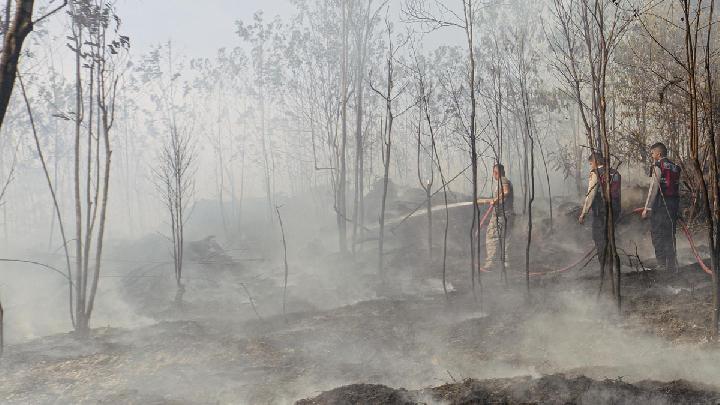
Forest and land fires spread across 22 provinces. Chaotic governance has raised the risks ahead of the arrival of El Nino.
A Temperature Anomaly Between Two Oceans
20 hari lalu
El Nino is not the only factor increasing the risk of hydrometeorological disasters this year.
Australia on Alert as Super El Nino Threat Looms in 2026
21 hari lalu

Said to be strongest in 140 years, a "super" El Nino threat looms over the Pacific, especially in nearby countries like Australia.
Bare-bones Measures to Anticipate Forest Fires
22 hari lalu
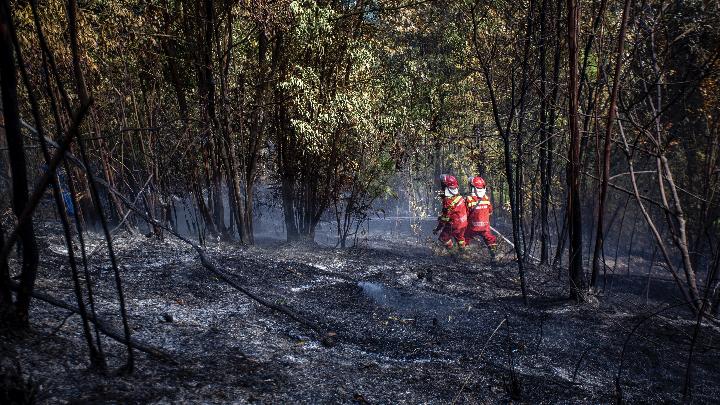
Forest and land fires in several provinces spread as the El Nio climate pattern takes hold.
Indonesia Assures Food Stocks Safe Amid El Nino Threat
23 hari lalu

The Minister of Agriculture Andi Amran Sulaiman stated that the El Nino Godzilla phenomenon is predicted to hit Indonesia for six months.
Half-Hearted Response to Climate Crisis
23 hari lalu
The threat of a climate crisis is looming. The government's response still falls short.






























:strip_icc():format(jpeg)/kly-media-production/medias/5414491/original/012054700_1763287155-530668458_18471777553074306_380593477510268437_n__1_.jpg)








:strip_icc():format(jpeg):watermark(kly-media-production/assets/images/watermarks/bola/watermark-color-landscape-new.png,1125,20,0)/kly-media-production/medias/6007179/original/011565500_1778899711-20260512BL_Portrait_John_Herdman_24.jpg)