TEMPO.CO, Jakarta - Institute for Development of Economics & Finance (Indef) projects that Indonesia's economic growth could slow down if the Middle East conflict, accompanied by an energy price surge, continues until the end of 2026. Indef assesses the estimated slowdown at 0.21 percent.
Director of the Indef Program, Eisha M. Rachbini, said the projection is based on the results of a computable general equilibrium (CGE) model simulation prepared by the Indef team to measure the impact of global economic shocks on Indonesia's economy.
She explained that in the first scenario, assuming a 30 percent increase in the world oil price from the baseline of 70 US dollars per barrel, the consumer price index (CPI) is estimated to increase by 0.28 percent. At the same time, real wages are expected to decrease by 0.26 percent, and exports to contract by 2.44 percent. Meanwhile, imports are projected to surge by 7.80 percent due to increased energy needs and costs.
Furthermore, investment is expected to increase by 1.20 percent, but economic growth is still projected to slow by 0.21 percent. "Because when the price of crude oil rises, purchasing power will be eroded, inflation will rise, and real wages will also decrease. Exports will also decrease because there will be more imports. Although we also have rising export commodities, there is a contraction from very high fuel purchases," said Eisha, as quoted from Antara, Thursday, June 25, 2026.
The second scenario depicts a slowdown in the economy of the main partner countries. Assuming a 5 percent decrease in import demand from Indonesia's export destinations, the CPI is estimated to increase by 0.11 percent. Real wages are estimated to decrease by 0.29 percent, while investment is estimated to increase by 0.36 percent.
On the other hand, exports are projected to decline the most, by 5.05 percent, while imports will decrease by 0.23 percent. This condition causes economic growth to correct by 0.24 percent.
As for the third scenario, which is trade fragmentation and disruption of global supply chains due to increasing tariffs and non-tariff barriers, the CPI is estimated to increase by 0.18 percent and real wages to decrease by 0.23 percent.
Investment is almost stagnant with an increase of only 0.07 percent. Meanwhile, exports and imports are projected to decline by 1.16 percent and 0.30 percent, respectively. In this scenario, economic growth is estimated to slow by 0.17 percent.
"We conclude that if geopolitical risks, disruption and fragmentation of supply chains, and unanticipated climate change affect the sufficiently fundamental economy and good policies, then this will have an impact on growth contraction," said Eisha.
With these various challenges, Indef estimates that Indonesia's economic growth in the second quarter of 2026 is estimated to slow to around 5 percent on a year-on-year basis, as consumption normalizes after Eid al-Fitr, pressure on energy and food prices, rupiah depreciation, and increased production costs.
Read: MSCI Status Shows Indonesia's Strong Market Accessibility, Airlangga Says
Click here to get the latest news updates from Tempo on Google News
Purbaya Says Indonesia's Economic Indicators Continue to Strengthen
3 hari lalu
The Finance Minister, Purbaya, assesses that Indonesia's economic growth is reflected in the job market and the reduction of poverty rates.
Bank Indonesia Extends Credit Card Payment Incentive Until Year-End
6 hari lalu
Bank Indonesia (BI) extends the relief for credit card bill payment until December 31, 2026.
How Much Investment Does Indonesia Need to Achieve 8% Growth?
10 hari lalu
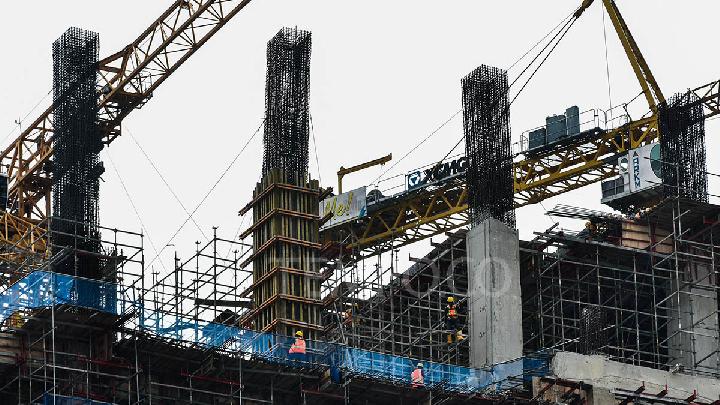
Indonesia requires an investment of Rp13,032.8 trillion until 2029 to achieve an 8 percent economic growth target.
World Bank Forecasts Slower Economic Growth for Indonesia
11 hari lalu
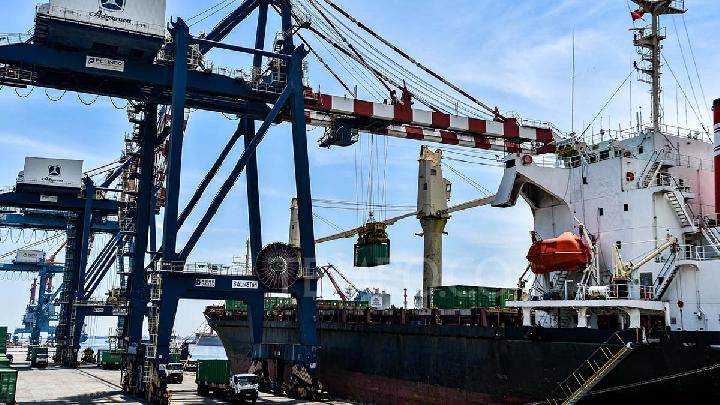
The World Bank projects Indonesia's 2026 economic growth to slow due to external pressures, shipping disruptions, and high oil prices.
What Are the Key Terms Outlined in Indonesia's 2027 Fiscal Framework?
14 hari lalu
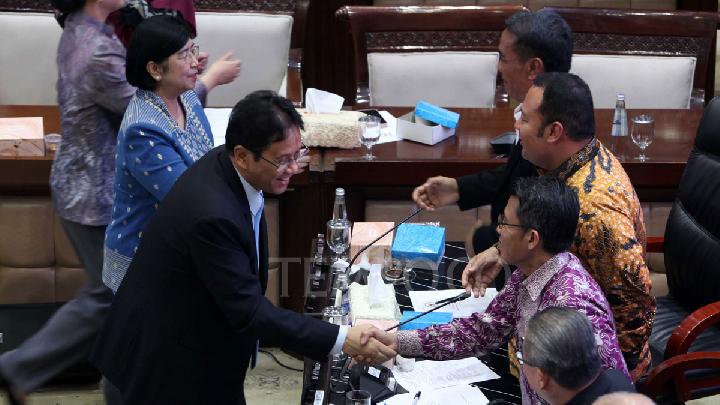
Economic growth in 2027 is targeted at 5.8-6.5 percent, while the rupiah exchange rate is within 16,800-17,500 range.
Prabowo Says Nationalism Fuels Lasting Economic Growth
15 hari lalu
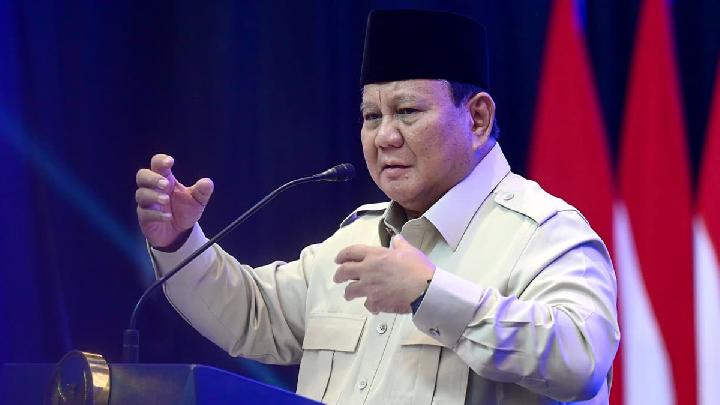
Prabowo Subianto emphasized that a country's economic growth cannot sustain itself without strong stimulus and support from the spirit of nationalism.
Indonesia's Purbaya Lauds 'Economic Resilience' Amid Global Uncertainty
15 hari lalu
Finance Minister Purbaya Yudhi Sadewa said Indonesia's economic performance remains solid amid global uncertainty.
Minister Purbaya Outlines Nine Strategies to Navigate Global Uncertainty
15 hari lalu
Purbaya says fiscal policy will remain responsive and forward-looking, backed by nine strategic measures to mitigate global uncertainty.
Indonesia's Purbaya Projects 5.4% Economic Growth in 2026
19 hari lalu

As of the first quarter of 2026, economic growth was recorded at 5.61%, higher than last year's growth of 5.11% year-on-year.
Prabowo on Uneven Economic Growth: Let's Be Honest About Reality
24 hari lalu
President Prabowo Subianto urged Indonesians to honestly assess the country's current condition during the Pancasila Day commemoration.