
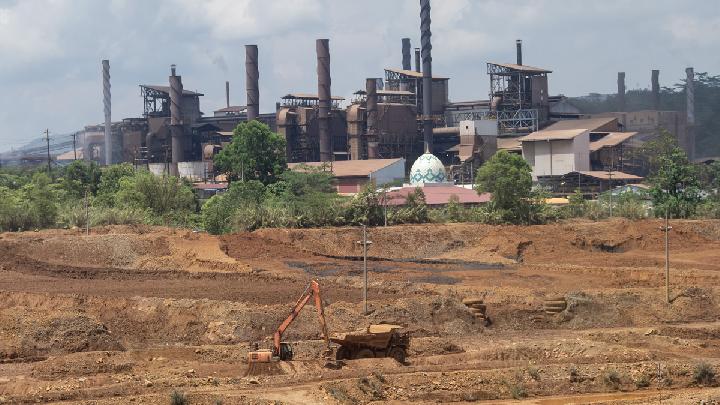
TEMPO.CO, Jakarta - Indonesia has inked an agreement on the nickel industry with the Philippines, according to the Coordinating Minister for Economic Affairs, Airlangga Hartarto. The MoU on Strategic Nickel Industry Development Cooperation serves as a structured platform connecting Indonesia's downstream capabilities and smelters with the upstream nickel ore supply from the Philippines, the minister said.
"This collaboration moves beyond an ordinary partnership. It lays the foundation for the Indonesia-Philippines Nickel Corridor," said Airlangga in a press release on Friday, 8 May 2026.
Together with the Philippines' Secretary of Trade and Industry, Hon. Maria Cristina A. Roque, Airlangga witnessed the signing of the agreement between the Indonesian Nickel Miners Association (APNI) and the Philippine Nickel Industry Association (PNIA).
The signing took place during the Indonesia-Philippines High-Level Business Roundtable at Jpark Island Resort, Cebu on Thursday, 7 May 2026.
The forum coincided with President Prabowo Subianto's visit for the 48th ASEAN Summit in the Philippines, and served as a concrete follow-up to the regional economic cooperation discussions during the 27th AECC Summit the day before.
According to the 2026 data from the United States Geological Survey (USGS), Indonesia and the Philippines jointly control 73.6 percent of global nickel production in 2025.
Indonesia contributed approximately 66.7 percent, or 2.6 million tons, while the Philippines contributed 6.9 percent, or 270 thousand tons in nickel production. In terms of reserves, Indonesia retains 44.5 percent of the world's nickel reserves, equivalent to 62 million tons, while the Philippines holds 3.4 percent, or 4.8 million tons.
Throughout 2025, Indonesia's total exports to the Philippines reached US$10.22 billion, accounting for 8.4 percent of the Philippines' total imports. Therefore, Indonesia is the third largest trading partner for the Philippines after China and Japan.
Airlangga stated that the Philippines is a crucial strategic trading partner for Indonesia in the Southeast Asia region, particularly for energy commodities and automotive products. He emphasized that the collaboration between the two countries is seen as a pivotal axis for the world's nickel reserves and production.
He elaborated that the MoU between APNI and PNIA covers strategic and long-term cooperation, including the exchange of information to stabilize regional and global nickel trade, joint development of nickel downstream technology, utilization of value-added products from processing industry by-products, and joint human resource development to support a sustainable nickel industry ecosystem.
Airlangga explained that Indonesia currently has a massive nickel downstream ecosystem, with the export value of processed nickel products reaching US$9.73 billion in 2025. Investments totaling US$47.36 billion and the employment of 180,600 workers are targeted to be achieved by 2030.
These smelters require a stable supply of ore with the appropriate silica-to-magnesia (Si:Mg) ratio, which can be met by Philippine nickel ore through blending.
Therefore, he said, the Philippines will no longer be just an exporter of raw ore. The country will be integrated into a higher regional value chain, while Indonesia will secure the feedstock for the upstream battery and stainless steel industry. According to Airlangga, this collaboration is in line with the directive from the 27th AECC Summit to strengthen critical supply chains in the ASEAN region.
Airlangga emphasized that nickel is a critical mineral with a central role in the energy transition. Nickel derivative products can be integrated into national and regional energy resilience strategies by strengthening energy storage, both for electric vehicles (EVs) and solar panel energy storage.
Thus, he stated, nickel downstream activities not only support the industry sector, but also directly contribute to a clean and sustainable energy mix.
To expedite downstream activities and enhance the competitiveness of the nickel industry, the Indonesian government is also continuously promoting the development of Special Economic Zones (SEZs) integrated with critical mineral supply chains.
Read: Indonesia, Philippines Promote Local Currency Transactions
Click here to get the latest news updates from Tempo on Google News
Prabowo Breaks Ground on 13 Downstream Projects Worth Rp116 Trillion
9 hari lalu
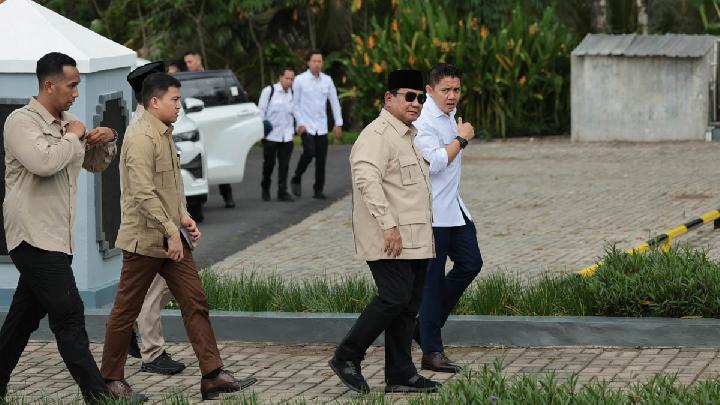
President Prabowo stated that downstreaming is the path to Indonesia's revival.
Indonesia, Philippines Promote Local Currency Transactions
14 hari lalu
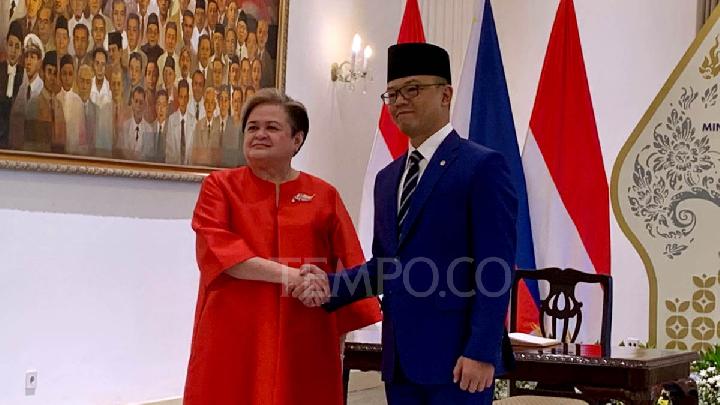
Indonesia and the Philippines have agreed to expand local currency transactions, integrate QR payment systems, and cooperate on nickel supply chains.
Ombudsman Apologizes for Arrest of New Chief Hery Susanto
21 hari lalu
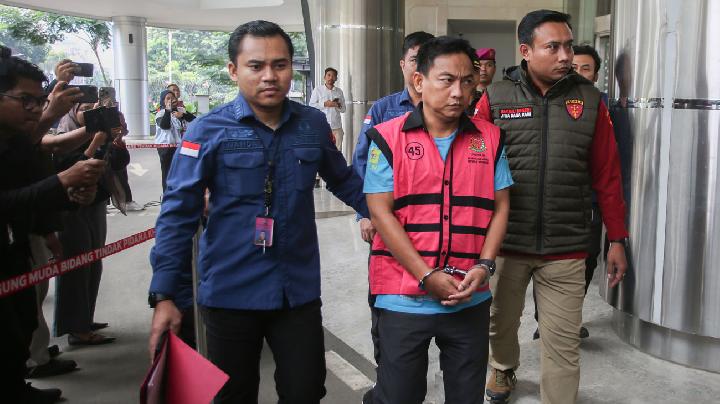
Hery Susanto was detained just one week after his inauguration as Chief of the Ombudsman for the 2026-2031 term.
Indonesia's Ombudsman Chief Named Suspect in Nickel Corruption Case
22 hari lalu

The AGO has named Hery Susanto, Chair of the Indonesian Ombudsman 2026-2031, a suspect in a corruption case linked to nickel mining governance.
Nickel Prices Recover to US$17,000 as Indonesia Cuts Production
30 hari lalu
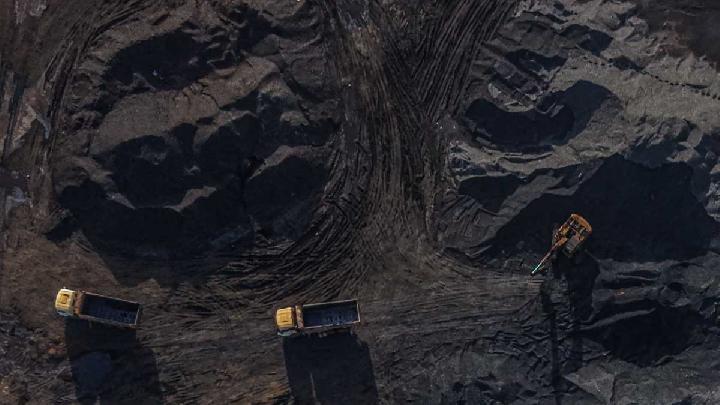
Nickel prices have stabilized at US$17,000 per ton after Indonesia cut nickel production volumes.
Indonesia to Gradually Ease Coal Production Curbs
41 hari lalu
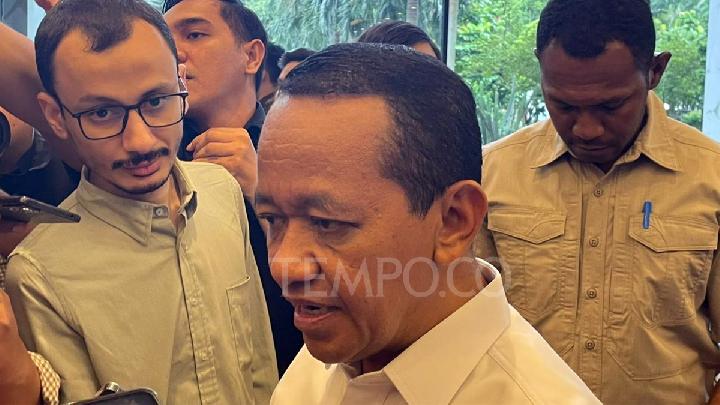
Minister Bahlil ensures that the government has not issued a new policy regarding the Coal Work Plan and Budget (RKAB) for 2026.
Indonesia to Increase Nickel Benchmark for State Revenue
42 hari lalu
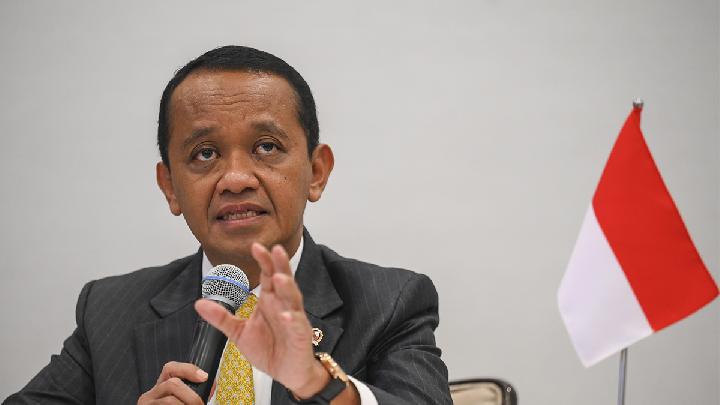
Energy Minister Bahlil Lahadalia announces plans to raise the nickel benchmark price following instructions from Prabowo to prioritize state revenue.
PPATK: Illegal Mining Turnover Reaches Rp992 Trillion
30 Januari 2026
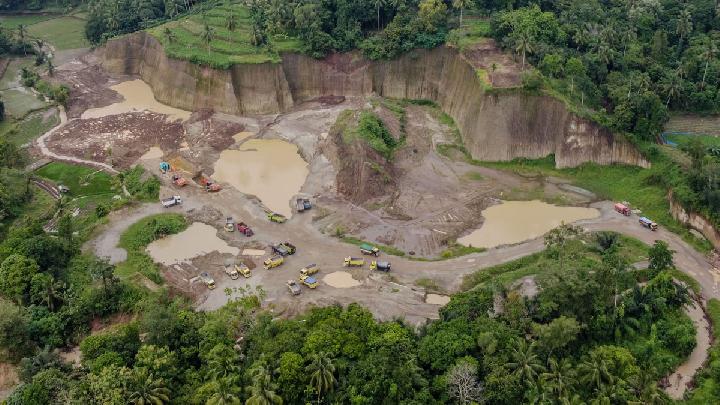
PPATK highlighted the prevalence of alleged Illegal Gold Mining (PETI) activities across various regions.
Vale Indonesia Seeks Higher 2026 Nickel Production Quota
20 Januari 2026
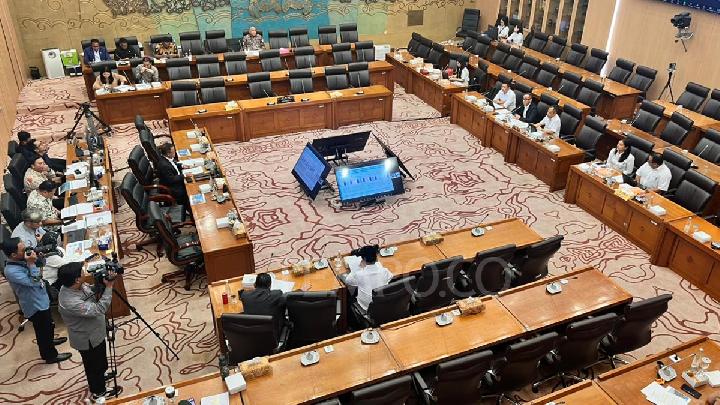
PT Vale Indonesia Tbk requests a nickel production quota increase from the DPR and the Ministry of Energy.
The High-Stakes Moment for the Commodities Business
8 Januari 2026
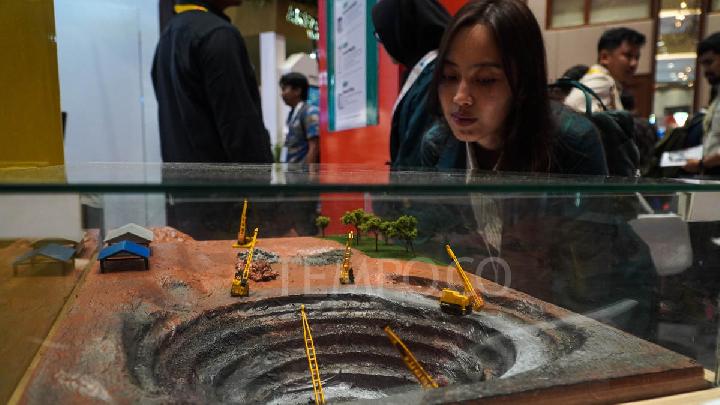
The outlook for commodities such as coal, nickel, and palm oil in 2026 is bleak, an alarm for small players.

















:strip_icc():format(jpeg):watermark(kly-media-production/assets/images/watermarks/bola/watermark-color-landscape-new.png,1125,20,0)/kly-media-production/medias/5495647/original/074499000_1770385031-barba.jpeg)

:strip_icc():format(jpeg)/kly-media-production/medias/5414491/original/012054700_1763287155-530668458_18471777553074306_380593477510268437_n__1_.jpg)



:strip_icc():format(jpeg):watermark(kly-media-production/assets/images/watermarks/bola/watermark-color-landscape-new.png,1125,20,0)/kly-media-production/medias/5469567/original/092858600_1768130667-4.jpg)